How Do You Know Your Administration Has Become Too Complicated?
Posted on August 7, 2026
← Back to Pillar: Back Office, Not ERP Related articles: Organizing office work centrally · When does your office organization become a problem?
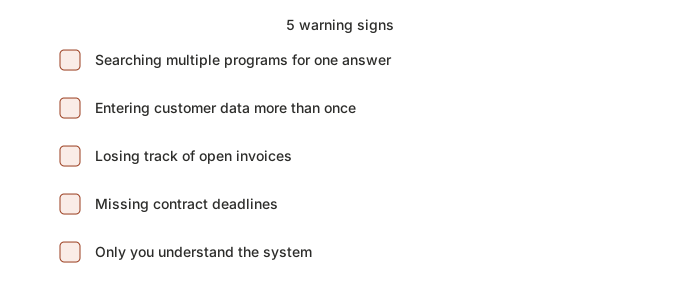 Five clear warning signs: you regularly search multiple programs for the same information, you enter customer data repeatedly, you lose track of open invoices, contract deadlines slip past you, and you're the only one who understands your own system.
The 5 warning signs, at a glance
- You search multiple programs to answer a simple question ("Has this invoice been paid?")
- You enter customer data repeatedly — in a spreadsheet, in the invoicing tool, in Word templates
- You lose track of open payments because no system matches them automatically
- Contract deadlines slip past you because you rely on memory instead of reminders
- Only you understand your own system — a stand-in or new hire would need days to get up to speed
Self-assessment checklist
Answer honestly for yourself: how many of these five points currently apply to you? Even two matches is a sign that simplifying is worth it.
The common thread behind all five warning signs
In all five cases, the root cause is the same underlying structure: scattered, disconnected tools and data. Fewer tools, less duplicate entry, and clearer, connected processes fix several of these warning signs at once.
Real-world example
A freelancer, taking an honest inventory, found that four of the five warning signs applied to him — including a missed contract renewal that cost him a customer. Switching to a connected back-office system with automatic reminders fixed this directly.
What you can do right now
Go through the five warning signs one by one and answer each honestly with yes or no. With three or more "yes" answers, it's worth taking a serious look at a central back-office tool.
FAQ
How do I recognize that my admin has become too complicated? Through warning signs like repeated data entry, no overview of payments, missed contract deadlines, and needing to search multiple programs for information.
What do I do if my office administration has become too disorganized? A central, connected back-office tool for customers, invoices, contracts, and payments addresses the most common causes of disorganization.
Archives
- August 2026 (1)
- July 2026 (5)
- June 2026 (4)
- May 2026 (5)
- April 2026 (4)